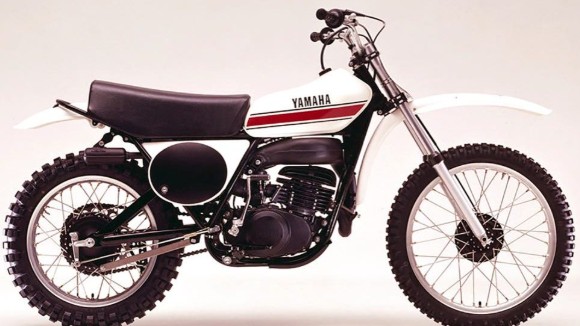
Specifications and workshop reference information for the 1975 Yamaha YZ250B, including engine, chassis, service data and setup details.
Note: Specs are compiled from factory data, manuals and owner feedback. Bikes vary — if yours is different, jump into the forum and share it.
| Engine Type | Single-cylinder, two-stroke, air-cooled |
| Displacement | 246 cc |
| Bore × Stroke | 70.0 × 64.0 mm |
| Compression Ratio | 6.8:1 |
| Maximum Power | ~34 hp |
| Maximum Torque | |
| Carburetor | Mikuni VM36 | Replacement Options |
| Lubrication | Premix |
| Fuel Mix Ratio | 25:1 | Premix Calculator |
| Ignition | Magneto |
| Spark Plug | NGK B8ES |
| Spark Plug Gap | 0.5 – 0.6 mm |
| Transmission Type | 5-speed constant mesh |
| Clutch | Wet multi-plate |
| Primary Reduction | 3.409 |
| Final Reduction | 3.000 |
| Overall Length | 2,150 mm |
| Overall Width | 820 mm |
| Overall Height | 1,200 mm |
| Wheelbase | 1,420 mm |
| Ground Clearance | 280 mm |
| Fuel Tank Capacity | 9.0 L |
| Bearing Sizes | Bearing Finder |
| Frame Type | Steel single cradle |
| Front Suspension | Telescopic forks | Fork Oil Levels |
| Rear Suspension | Twin shock |
| Front Suspension Travel | |
| Rear Suspension Travel |
| Front Tire | 3.00 – 21 | Tyre Size Guide |
| Rear Tire | 4.00 – 18 | Tyre Size Guide |
| Front Brake | Drum |
| Rear Brake | Drum |
| 1968 Yamaha DT1 250 |
| 1971 Rickman Montesa 250 |
| 1971 Yamaha DT1E 250 |
The 1975 Yamaha YZ250B arrived at a time when motocross suspension design was changing at a remarkable pace. Twin-shock machines still filled starting gates around the world, but Yamaha had already begun experimenting with something very different: a single rear shock mounted beneath the fuel tank and seat. By 1975, that idea had become one of the defining features of Yamaha’s production motocross machines.
The YZ250B was a serious competition motorcycle rather than a trail bike dressed for racing. Its air-cooled two-stroke single delivered the sharp, lightweight performance racers expected from a quarter-litre motocrosser, while the chassis reflected Yamaha’s determination to gain an advantage through suspension development.
The famous Monocross rear suspension was the headline feature. Instead of the conventional pair of exposed shocks beside the rear wheel, Yamaha used a centrally mounted single shock and long swingarm arrangement. For today's owner restoring or setting up one of these machines, understanding vintage motorcycle rear suspension setup and sag is particularly important. Decades of spring fatigue, worn bushes and replacement components can make a surviving YZ behave very differently from when it left the dealer.
At the front, conventional telescopic forks completed a suspension package that offered impressive travel for the period. Fork condition is now one of the areas worth examining carefully on an unrestored bike. Worn bushes, damaged tubes, tired springs and decades-old oil can completely change the handling. The VMXOwners vintage motorcycle fork oil levels and setup guide provides useful background when servicing period forks.
Fuel delivery was through a conventional slide carburettor feeding the piston-port two-stroke engine. As with many competition motorcycles of this age, carburettors may have been changed, re-jetted or modified several times during the bike's life. Owners dealing with worn originals or investigating alternatives can use the vintage motorcycle carburettor replacement guide as a starting point.
The YZ250B's two-stroke engine also depended on premixed fuel, and this is one area where old workshop habits and modern oils sometimes collide. Period recommendations should always be considered when dealing with an original engine, but owners calculating fuel quantities for a chosen ratio can use the 2-stroke premix oil calculator.
What makes the 1975 Yamaha YZ250B particularly interesting today is that it represents more than another old Yamaha motocrosser. It belongs to the period when suspension travel was rapidly increasing and manufacturers were questioning long-established chassis design. Yamaha's commitment to the single-shock concept helped push motocross development toward the long-travel monoshock layouts that would eventually become universal.
Finding a completely original example today can be difficult. Race bikes were rarely treated gently, and handlebars, guards, exhausts, shocks, wheels and engine components were commonly replaced during their competitive lives. That history is part of their appeal.
A properly restored or sympathetically maintained 1975 Yamaha YZ250B is therefore both a usable vintage racer and a reminder of one of motocross's great engineering transitions — when Yamaha helped prove that the future of rear suspension needed only one shock.
Discuss vintage motocross bikes, restorations, tuning and riding.